Insight on Purpose Built
Student Accommodation (PBSA)
Shifting Student Demographics
Less than a decade ago, the UK PBSA market was dominated by international students, accounting for 80% of occupied bed spaces, many from China, India and Africa drawn by the prestige of a British education. Many of whom sought out high quality, best-in-class accommodation paying premium rents.
Fast forward five years post-Covid, and the make-up looks very different. A combination of tighter immigration policies, weaker exchange rates against the Pound Sterling, and a general cost inflation has made overseas study more expensive and therefore reduced international demand – with UK sponsored study visas dropping by c.30% since 2022. At the same time, the rise of other European Universities backed by supportive government policies and lower fees have further drawn international demand away.
Today, the UK’s PBSA occupation is roughly made up of 50% international and 50% domestic students.
While the UK remains globally attractive, and may even benefit from Trump’s politics pushing students previously targeting North American universities away to the UK, the market is much more balanced than ever.
Operational Challenges with Evolving Behaviours
Students are increasingly delaying accommodation bookings, waiting to see if they can secure better university through clearing.
This causes operator frustration as the slower letting cycles adds pressure on managing occupancy forecast.
However, record numbers of students continue to gain university places — a reminder that demand remains strong, even if timing and preferences are shifting.
Where the Real Opportunity Lies
After years of with new development launches, mostly aimed at the higher ends of the market, where is the real opportunity today in PBSA?
In our view, the smart play is to return to the core fundamentals – well located PBSAs with proven history serving local students at more affordable rents will find themselves much more resilient against headwinds tied to foreign demand.
Many well-established yet decade-old student accommodation assets are ripe for repositioning and can often be acquired at prices well below their replacement cost. These first or early second generation PBSAs offer a faster, greener and more efficient route to value creation. A rolling Capex programme during the academic year (if occupancy permits) or a pre-planned summer only full building works offers a prudent strategy that modernises rooms and amenity spaces while preserving investors’ returns.
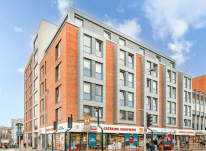
Aprirose’s recent acquisition of Central Studios Reading exemplifies this strategy - a robust asset management plan was designed to combine secure income with active value creation.
The next phase of PBSA growth won’t just come from shiny new towers — it will come from reinvigorating existing assets in the right places, for the right students, with the right strategy.
Less than a decade ago, the UK PBSA market was dominated by international students, accounting for 80% of occupied bed spaces, many from China, India and Africa drawn by the prestige of a British education. Many of whom sought out high quality, best-in-class accommodation paying premium rents.
Fast forward five years post-Covid, and the make-up looks very different. A combination of tighter immigration policies, weaker exchange rates against the Pound Sterling, and a general cost inflation has made overseas study more expensive and therefore reduced international demand – with UK sponsored study visas dropping by c.30% since 2022. At the same time, the rise of other European Universities backed by supportive government policies and lower fees have further drawn international demand away.
Today, the UK’s PBSA occupation is roughly made up of 50% international and 50% domestic students.
While the UK remains globally attractive, and may even benefit from Trump’s politics pushing students previously targeting North American universities away to the UK, the market is much more balanced than ever.
Operational Challenges with Evolving Behaviours
Students are increasingly delaying accommodation bookings, waiting to see if they can secure better university through clearing.
This causes operator frustration as the slower letting cycles adds pressure on managing occupancy forecast.
However, record numbers of students continue to gain university places — a reminder that demand remains strong, even if timing and preferences are shifting.
Where the Real Opportunity Lies
After years of with new development launches, mostly aimed at the higher ends of the market, where is the real opportunity today in PBSA?
In our view, the smart play is to return to the core fundamentals – well located PBSAs with proven history serving local students at more affordable rents will find themselves much more resilient against headwinds tied to foreign demand.
Many well-established yet decade-old student accommodation assets are ripe for repositioning and can often be acquired at prices well below their replacement cost. These first or early second generation PBSAs offer a faster, greener and more efficient route to value creation. A rolling Capex programme during the academic year (if occupancy permits) or a pre-planned summer only full building works offers a prudent strategy that modernises rooms and amenity spaces while preserving investors’ returns.
Aprirose’s recent acquisition of Central Studios Reading exemplifies this strategy - a robust asset management plan was designed to combine secure income with active value creation.
The next phase of PBSA growth won’t just come from shiny new towers — it will come from reinvigorating existing assets in the right places, for the right students, with the right strategy.
7 September 2026
Aprirose Completes Refinance Of £134.5M Portfolio
8 July 2026
Christmas Charity Donation